$13.46
$22.34
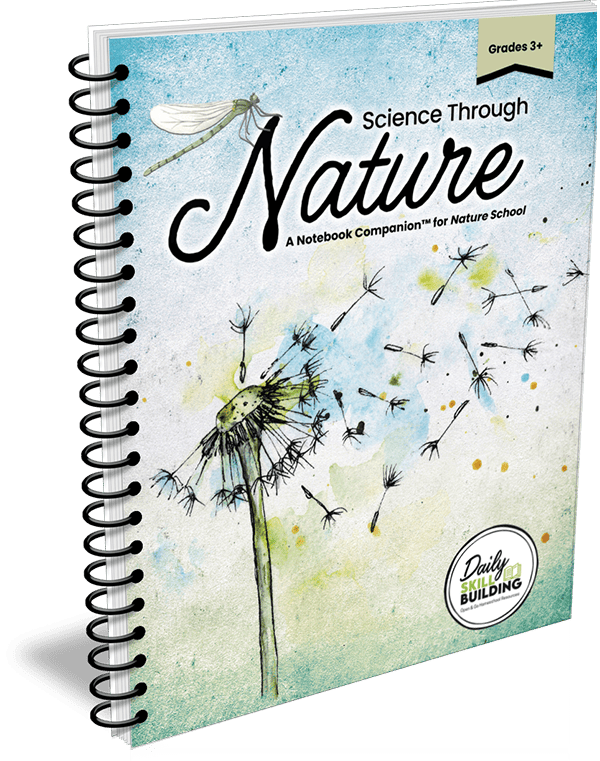
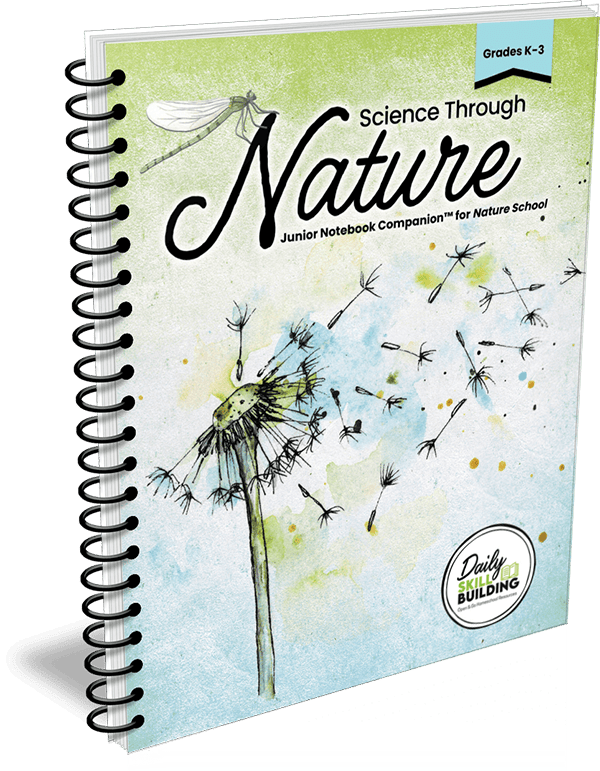
Science Through Nature Junior Notebook Companion™ for Nature School SAMPLE NOTEBOOK | SAMPLE LESSON PLANS | SAMPLE LESSON PLANS WITH ADD-ONS | SCOPE & SEQUENCE “The book Nature School, coupled with one or both of the two Science Through Nature Notebook Companions™, makes an outstanding nature study course that can be used for kindergarten through about eighth grade.” — Cathy Duffy (read full review) Instill a love of nature and sense of wonder in your kids by spending time notebooking your way through nature study and hands-on experiences all about the natural environment. A nature-based education is easy when you pair Nature School (sold separately) with Science Through Nature Junior Notebook Companion™. A Notebook Companion™ is also available for grades 3 and up (sold separately), as well as many optional add-ons like fact cards, a coloring notebook, and lifecycle cut-and-paste worksheets. (See the add-ons tab for details and samples.) With The Science Through Nature Junior Notebook Companion™ and Nature School (sold separately), students will practice written narration as they answer our open-ended questions about what they are learning. For the youngest students, you can ask the questions orally and then help them write in their notebooks. They’ll have fun sketching what they learned. It’s completely open-and-go, so there is no prep-work other than for optional hands-on activities. All lines for answering questions are designed for early writers. Science Through Nature Junior Notebook Companion™ and Nature School (sold separately) explore five of the major habitats of the world: Temperate Forests Deserts Seashore Grasslands Wetlands Nature School and our Notebook Companion™ can be used with any worldview. There is nothing that conflicts with a Christian worldview, and faith-based content has not been included. Nature School Nature School is a beautiful living book all about the natural world. Students will learn about one habitat at a time and all the living things associated with each habitat. Using Science Through Nature, students will document their learning through notebooking activities. Our Notebook Companion™ has been created with publisher permission from The Quarto Group. You can buy Nature School here. Our publisher-approved Notebook Companion™ follows along with Nature School and will help you get the very most from the book. Pair it with our included lesson plans and you can use it for a full year of elementary science! Open-ended questions help guide students in their written response. The optional add-on Coloring Notebook provides space for true written narration and coloring and makes a great addition to our Notebook Companions. See the add-on tab for all optional add-ons. What Students Will Learn There are more than 200 kinds of animals and more than 60 kinds of plants and other organisms waiting for your kids to discover. Here’s a look at just a few of them: Invertebrates: cicada, spider, scorpion, sea anemone, common octopus, jellyfish, bay scallop, fiddler crab, lightning whelk, moth, sand dollar, mosquito, dragonfly, and more! Mammals: bat, hare, lion, porcupine, cheetah, manatee, wolf, coyote, giant anteater, blue wildebeest, dingo, fennec fox, jerboa, marsh deer, muskrat, red kangaroo, and more! Reptiles & Amphibians: salamander, sea turtle (all 7 kinds), frog, snake, lizard, alligator, gila monster, goanna, mangrove terrapin, skink, toad, tortoise, and more! Birds: gull, Canada goose, ostrich, piping plover, African fish eagle, black grouse, black-shouldered kite, common pheasant, golden eagle, hawkfinch, pharaoh eagle owl, raptor, sanderling, yellow-headed blackbird, and more! Fish: shark, seahorse, barracuda, bluefin tuna, common blenny, common carp, giant trevally, longnose gar, malabar grouper, rock goby, and more! Plants & More: oak, maple, and walnut trees; fern, herbaceous plants, mushroom, agave, pearlwort, date palm, toothed wrack, red sand verbena, big bluestem, acacia, willows, cocklebur, narrow-leaved rattle, goldenrod, bacteria, cypress, epipelon, epilithon, marsh grass, sundew, and more! Concepts Covered Nature School teaches numerous keywords and key concepts such as: Photosynthesis Climax forest Chlorophyll Tree shapes Leaf shapes Food Chain Types of bird nests (with examples) Evaporation Dust storms (haboobs) Animal and Plant Lifecycles Pollinators Nocturnality Predator Invertebrate Migration Ocean Zones How a tornado forms (diagram) Methods of seed dispersal And many, many more! Explore the Earth’s Habitats In addition to drawing numerous animals, plants, and other organisms, students will also draw and label numerous diagrams (a few of the more complex diagrams are provided so that drawing them is not required). One habitat at a time, they’ll look closely at things such as: Temperate Forests: Photosynthesis Composition of a forest Levels of the forest Rotting log ecosystem with organisms Parts of a deciduous tree Layers of a tree trunk Leaf shapes Types of tree bark Fern life cycle Parts of a mushroom Forest food chain Kinds of bird nests Salamander life cycle Parts of various animals including an elk, bear, great tit, frog, toad, and bee (plus beehive) Deserts: Deserts of the world Desert weathering and erosion Kinds of rock Parts of a date palm Desert food chain Types of feathers on a bird’s wing Parts of an ant hill Parts of various animals including a camel, Arabian wolf, ostrich, and rattlesnake Seashore: Parts of a beach Kinds of sand Ocean zones Minerals in ocean water Parts of a wave Moon’s pull on the tides Tidal zones Kinds of seashells Types of plankton Fish life cycle Seashore food chain Birds with various beak shapes Parts of kelp Parts of various animals including a hermit crab, octopus, seahorse, shark, walrus, and gull Grasslands: Types of grasslands How a tornado forms Parts of a piece of grass Parts of the carbon cycle Parts of a sunflower Grassland food chain Kinds of feathers Bird life cycle Reptile life cycle Parts of a termite mound Grasshopper life cycle Parts of various animals including an American bison, cheetah, prairie chicken, Great Plains skink, and cicada Wetlands: Parts of a wetland How wetlands form Parts of a hurricane Parts of an aquifer Parts of the water cycle Types of algae Parts of a mangrove tree Wetland food chain Differences between an alligator and crocodile Mosquito life cycle Parts of various animals including an opossum, heron, snapping turtle, and dragonfly Students will get to sketch and label numerous animals, plants, and other organisms. They’ll also get to draw and learn about food chains, life cycles, parts of various ecosystems, types of bird nests, types of feathers, kinds of seashells, types of bird beaks, how a tornado forms, kinds of grasslands, parts of a wetland, parts of a hurricane, the water cycle, and so much more! Hands-On Activities Nature School also provides instructions for 35 activities students can complete at home using everyday items. There is a special activity page for each activity in our Science Through Nature Junior Notebook Companion™ so students can save pictures of their projects, write about what they learned, and much more. Take a look at the activities included: Temperate Forests Activities Nature Journal Hidden Hues Broad Leaf and Needle Leaf Comparisons Transpiration Demonstration Make Tracks (scat, footprints) Bark and Leaf Rubbings Painting with Evergreen Branches Deserts Activities Nature Journal Grow a Garden Desertscape Diorama Create a Cactus Nature Walk Evaporation Demonstration Sundial Map the Desert Seashore Activities Nature Journal Salt Painting Salt Dough Seashells Ocean in a Bottle On the Beach: Beachcombing Seashore Scavenger Hunt Grasslands Activities Nature Journal Build a Burrow Camouflage Pressed Grasses and Wildflowers Growing Grass Tornado in a Bottle Paint a Prairie Wetlands Activities Nature Journal Pond Dipping What’s a Wetland? How Wetlands Work Breathing Leaves Algae Observation Just Add Water There are five bonus coloring pages also included, one for each habitat. The Science Through Nature Notebook Companion™ and Nature School (sold separately) are completely customizable and flexible so you can use what fits your family’s needs the best and work at the pace that works for you! Build a lifelong love of learning and an appreciation of nature as you have fun learning about the science that’s all around us in the world. The possibilities for learning are truly endless with Science Through Nature Junior Notebook Companion™ and Nature School (sold separately)!
Available In Print